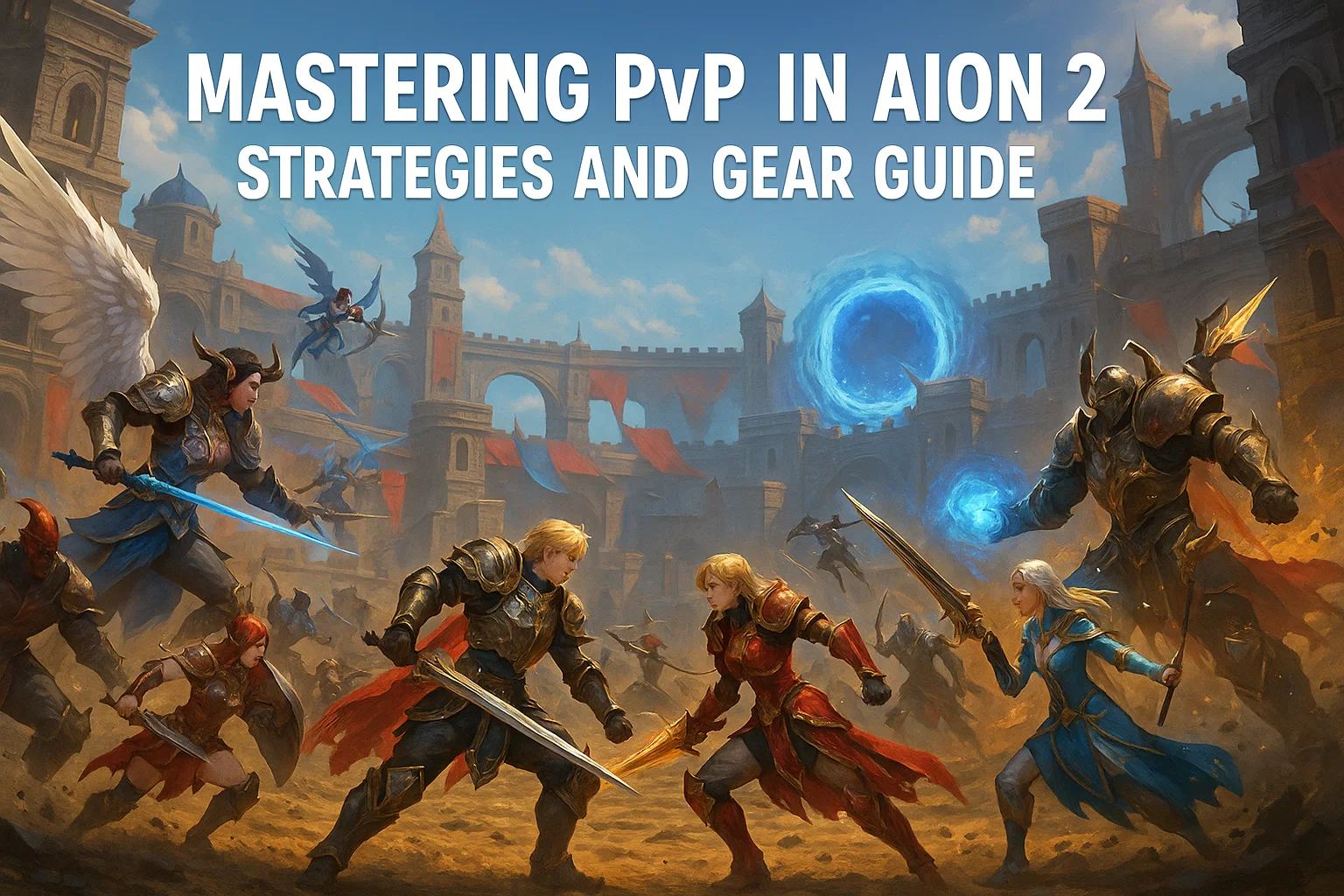
Aion 2 has been out long enough now that players are no longer just poking around the tutorial zones. People are diving into arenas, sniffing around the Abyss, and testing how much the current gear system actually matters. After spending a good chunk of time watching, playing, and comparing notes with other players, I’ve pulled together a clearer picture of what Aion 2’s PvP landscape looks like right now. It’s still early, the meta isn’t locked in, and the game has some rough edges, but there’s enough here to form a meaningful first impression.
Below is a breakdown of the current PvP options, how progression actually works, and what matters most if you want to stay competitive without feeling like you’re getting farmed into the floor.
1. What PvP Modes Are Available Right Now
Aion 2 currently offers a mix of instanced and open-world PvP, each with its own vibe and reward loop. The structure isn’t super deep yet, but the basics are in place.
1v1 Arena
This is your straightforward duel setup. Fun at times, but it’s also easy to feel the limits of class matchups and gear gaps. In a game where stat advantages can spiral quickly, pure 1v1s are rarely balanced, and Aion 2 is no exception.
4v4 Arena
A bit more tactical and much more forgiving than 1v1. Team comps matter more, and fights feel more like proper skirmishes rather than gear checks. If you’re the type who enjoys smaller coordinated battles, this is the more interesting arena mode so far.
8v8 Battlefield
This is essentially two parties smashing into each other in an instanced battleground. Rewards are good when you win, but losing gives nothing, so queueing without a strong group can feel like a coin flip. Chaotic but fun, especially if you like medium-scale fights.
As far as structured modes go, that’s the full list at the moment. Not a ton of variety yet, but enough to understand the direction the game is heading.
2. Open-World PvP: Abyss Zones and Artifact Events
The open-world PvP is where Aion 2 feels closest to its roots. You get weekly time in the Abyss, which you can expand if you’re premium or using extra items, and this zone acts as a cross-server fight hub. Every time your server links with another faction’s zone, the field turns into a mix of PvE grinding, ambushes, and full-scale clashes around artifact events.
These artifact fights are the biggest “PvP event” the game currently offers. When an artifact spawns, both sides collapse onto the same location and hammer away while dealing with the enemy faction. Winning gives access to a special rift where you can farm high-value mobs without being interrupted. It’s basically a temporary safe room with prizes.
The catch is that artifact battles scale aggressively with your gear. If you aren’t near the top of the bracket, expect to be deleted more often than you contribute.
In this same area, progressing through quests, killing mobs, and surviving enemy players all feed into your Abyss Points income. Those points become critical for your long-term PvP gear progression.
3. Rift Invasions: The Classic Chaos Option
Every few hours, special rifts open that allow players to invade the opposing faction’s territory. These portals lead directly into the enemy’s regular leveling zones, giving you the chance to gank, defend, or just roam with your group looking for fights.
This system brings back a lot of the old-school feel from earlier Aion versions. A small coordinated party can have a blast here, and even low-gear players can contribute by scouting or sticking with a guild group. It’s messy, unpredictable, and easily one of the more entertaining PvP features, especially if you enjoy the social aspect of coordinating with a guild.
4. Gear Progression and Why the Gap Feels So Wide
Here’s where the real meat of Aion 2’s PvP system comes into play. Almost everything loops back to gear score, starting with your PvE equipment and eventually branching into PvP-specific sets.
To stay competitive, you need to build and optimize the Abyss PvP set, which provides additional PvP damage bonuses. The issue is that your PvE gear score heavily influences how effectively you can farm points in the first place. Someone who has already pushed into the 2,000+ gear score range can farm kills, complete Abyss objectives faster, and snowball into better PvP gear before you even get started.
Players progressing slower—whether because they’re free-to-play or simply not no-lifing the grind—have a much harder time catching up. The moment someone starts farming you, they accelerate their progression while slowing yours to a crawl. That snowball effect is the biggest pain point in early Aion 2 PvP.
5. Managing Resources and Staying Efficient
Because the game’s economy ties into progression so directly, managing your time and in-game currency becomes especially important. For players trying to gear up or keep up with stronger opponents, saving resources and picking your battles can make a noticeable difference over time. When I first started, I underestimated how much planning mattered, only realizing later that even smaller boosts or optimizations could help smooth out the grind for Aion 2 Kinah.
If you’re feeling stuck behind faster-progressing players, play around tighter schedules by focusing on safe Abyss farming windows, group play, and targeted activities that give the best return on effort. I learned quickly that small, smart routines add up.
6. Progression Pressure and Player Experience
One thing that kept coming up while watching other players and comparing experiences is that the system rewards the highest-geared players the fastest. If someone has already invested heavily into their PvE gear, they enter PvP ahead of the pack and stay there. It isn’t impossible to catch up, but it definitely feels uphill.
Players who prefer a smoother, less demanding climb sometimes look for easier ways to maintain their gameplay flow. In discussions with other players, some mentioned third-party platforms like U4GM as a reference point when talking about trade cultures or community habits, though personally I’ve always preferred sticking to in-game methods unless the gap becomes overwhelming.
7. Tips for New PvP-Focused Players
If you’re hopping into Aion 2 specifically for PvP or hoping to avoid feeling outclassed early, here are a few practical takeaways:
Focus on group content early. Being in a coordinated party makes a huge difference, especially in open-world zones.
Learn to rotate your PvP windows. Certain times are less active, giving you safer farming opportunities.
Prioritize Abyss Point income. PvP gear matters more the higher you climb.
Don’t waste your upgrade materials. You’ll likely need multiple versions of the same gear piece to roll ideal stats later.
Avoid direct duels with players far above your gear score. The loss of time and momentum isn’t worth it.
As your routine tightens, you’ll find the overall grind becomes less punishing and more predictable. Some players also look for boosts in convenience or time-saving methods, including options tied to Aion 2 Kinah instant delivery, which occasionally comes up when people talk about getting past early bottlenecks. Different players take different paths, so your approach might depend on how much daily time you can commit.
8.
Aion 2’s PvP foundation is here, but the system still feels rough around the edges. The actual gameplay can be fun and chaotic in the best way, but progression strongly favors the fastest or earliest players. If you enjoy structured modes and open-field battles, there’s definitely entertainment to be had. Just be prepared for a slow start unless you’re ready to grind consistently.
Setup Recommendations: Aion 2 News