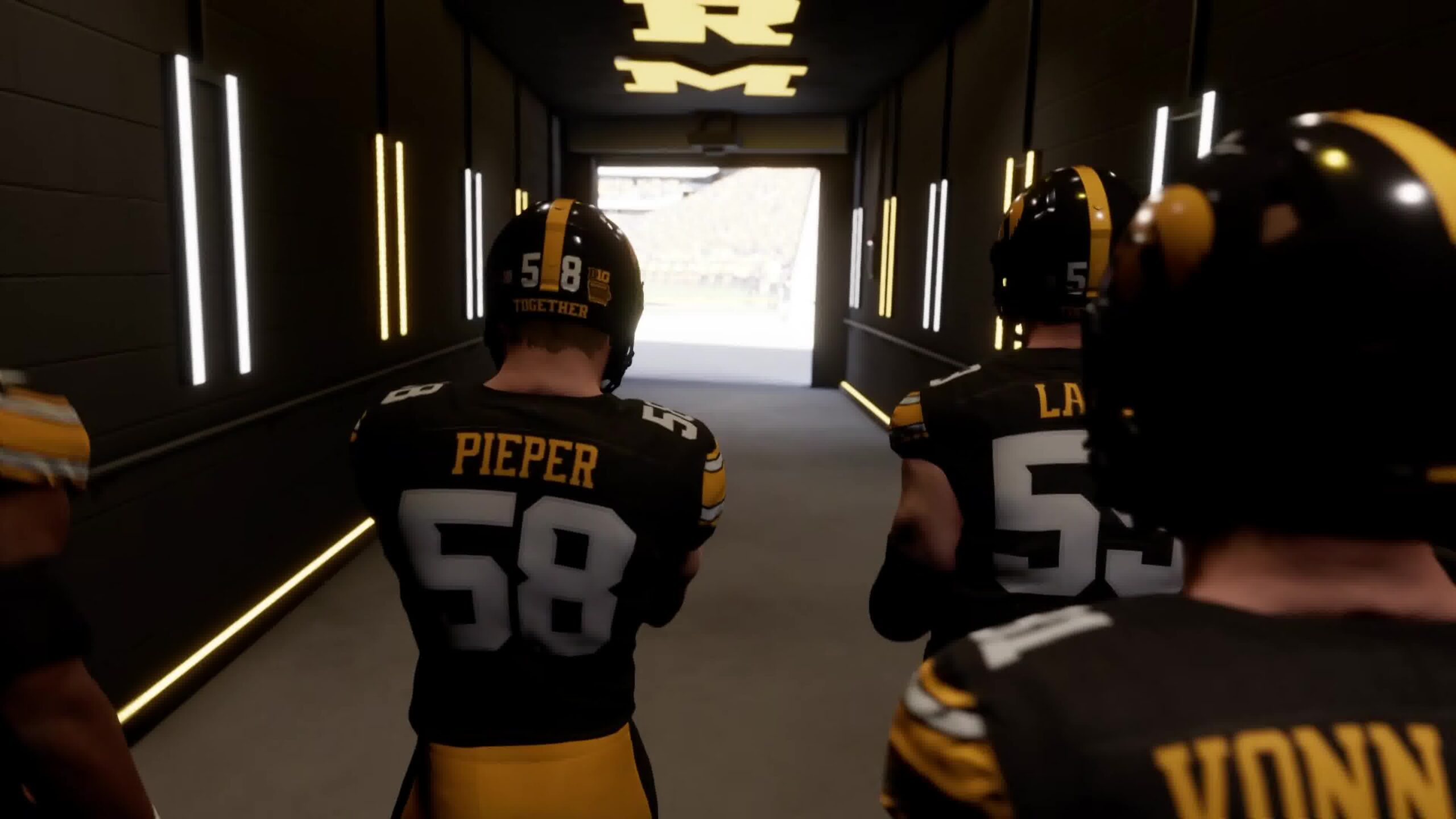
College Football 27 reintroduces one of its most unpredictable and fan-favorite modes after a 12-year absence: Mascot Mashup. Built as a work-in-progress feature, the mode immediately establishes itself as less of a traditional football simulation and more of a sandbox for absurd, high-octane experimentation—where mascots throw behind-the-back passes, break tackles they shouldn’t survive, and routinely turn special teams into highlight reels.
At its core, Mascot Mashup strips away conventional balance and replaces it with pure spectacle: every mascot is rated 99 overall, unlocking maximum athletic capability regardless of size, shape, or realism. The result is a gameplay environment where South Alabama’s Southpaw, Texas Tech’s Raider Red, and even inanimate-style mascots like the Stanford Tree behave like elite dual-threat athletes.
The Return of Mascot Mashup After 12 Years
The standout narrative behind this mode is its return after a long dormancy. In its revival, Mascot Mashup is designed as both a celebration of college football culture and a testing ground for exaggerated mechanics. Players begin with a limited roster of mascots—typically 10 unlocked by default—and can expand their collection by completing Play Now matches.
Additional unlock systems include full roster access via an optional MVP Plus subscription, which grants all 119 mascots immediately. This structure creates a layered progression loop where casual players can gradually unlock characters while dedicated users can immediately jump into full-scale experimentation.
Progression aside, the real appeal is the unpredictability of gameplay.
Southpaw Makes History: First Mascot Touchdown Ever
One of the earliest landmark moments comes from South Alabama’s Southpaw, who becomes the first mascot to score a touchdown in the revived mode. The sequence is emblematic of Mascot Mashup’s tone: broken tackles, awkward animations, and unconventional passing mechanics leading to a historic score.
From scrambling quarterbacks to drag routes executed under pressure, the gameplay frequently abandons realism in favor of comedic physics-driven outcomes. Southpaw’s touchdown isn’t just a score—it sets the tone for everything that follows: anything can happen, and usually does.
Raider Red and the Emergence of “Mascot Meta“
Texas Tech’s Raider Red quickly demonstrates that even mascots can be optimized. The introduction of a quarterback sneak meter adds a timing-based mechanic that forces players to engage more deliberately with short-yardage situations.
However, traditional football logic is frequently overshadowed by mascot physics. Catch animations include unexpected falls, exaggerated flips, and improbable contested grabs. Even simple slant routes can evolve into chaotic highlight plays depending on timing and positioning.
Interestingly, early gameplay begins revealing a “meta”: running the football is often more reliable than passing. With 99 overall stats across the board, mascots frequently break tackles at rates that make inside runs surprisingly efficient.
Special Teams Become the Most Explosive Phase of Play
Perhaps the most surprising development in Mascot Mashup is the dominance of special teams plays.
Kickoff returns and punt returns routinely produce massive gains, with mascots like Miami’s Sebastian delivering kickoff return touchdowns that instantly shift momentum. These plays highlight how speed, lane vision, and broken tackle animations combine to create explosive scoring opportunities.
In some cases, kickoff returns become more consistent scoring threats than structured offensive drives, reinforcing the mode’s chaotic identity.
Behind-the-Back Passes, Jump Shots, and Broken Football Logic
Passing mechanics in Mascot Mashup deserve their own category of analysis. Traditional quarterback play is replaced by experimental animations:
- Behind-the-back throws that travel 30–50 yards under pressure
- Jump-shot style releases in scramble situations
- No-look passes thrown mid-spin or mid-cartwheel
- Passes that ricochet off defenders or are tipped into accidental completions
These mechanics are not simply cosmetic—they directly influence outcomes. Entire drives can hinge on a single unconventional animation triggering a completion that would be impossible in standard gameplay.
The result is a system where improvisation is not just encouraged—it is necessary.
Big Red, Stanford Tree, and the Physics Experiment Era
The climax of Mascot Mashup gameplay arrives with matchups featuring Western Kentucky’s Big Red and Stanford’s Tree. These mascots represent two extremes: one fully expressive and mobile, the other limited by design constraints that introduce strategic uncertainty.
The Tree’s lack of traditional limbs becomes a recurring gameplay factor, particularly in interception logic and catch animations. Meanwhile, Big Red’s versatility turns him into a dominant force across offense, defense, and even kicking scenarios.
One of the most defining moments in the gameplay experience is the emergence of field goal experimentation. With every kicker rated 99 overall, players begin attempting extreme-range kicks far beyond normal football logic, including:
- 60+ yard field goals becoming routine
- 80+ yard successful attempts under ideal conditions
- Experimental attempts approaching 100+ yards
At this stage, Mascot Mashup transitions from a sports mode into a physics sandbox.
Defensive Chaos and Turnover Frenzies
Defense in Mascot Mashup is equally unpredictable. Forced fumbles occur at unusually high rates, especially in matchups involving non-human-shaped mascots. Strip animations, accidental punch-outs, and chaotic tackle interactions frequently lead to sudden momentum swings.
In multiple sequences, defensive plays result in:
- Back-to-back forced fumbles
- Interceptions in triple coverage
- Goal-line turnovers caused by animation collisions
The unpredictability ensures no lead is safe, reinforcing the mode’s “anything can happen” identity.
Economy, Progression, and Player Investment
While Mascot Mashup is primarily a gameplay experience, progression systems and optional monetization exist to streamline access to content. Players who want to accelerate mascot unlocks or build full collections may engage with in-game currency systems such as CFB 27 Coins.
For users seeking faster roster completion or competitive experimentation setups, services like Buy College Football 27 Coins become part of the broader ecosystem surrounding progression efficiency. This ties directly into how quickly players can unlock mascots and access the full breadth of the mode.
Final Thoughts: A Controlled Collapse of Football Logic
Mascot Mashup in College Football 27 succeeds precisely because it refuses to behave like traditional football. It is structured chaos: a system where 99 overall mascots break physics, pass logic is optional, and special teams can decide entire games.
From Southpaw’s historic touchdown to Big Red’s long-range field goal experiments and the Stanford Tree’s awkward defensive presence, the mode thrives on unpredictability. It is not about simulation accuracy—it is about emergent moments that feel impossible but still count within the rules of the game.
If anything defines Mascot Mashup, it is this: the more broken it looks, the more entertaining it becomes.